Industrial Property Stamp Duty Singapore: Seller’s Stamp Duty on Disposal Explained
Industrial property investing in Singapore can feel straightforward on the surface, until you look at what happens when you sell. For buyers, the immediate questions usually revolve around zoning, unit specs, and whether the lease term works for their business or investment horizon. For sellers, the real pressure comes from timing, because seller’s stamp duty (SSD) can materially change the net proceeds of an exit.
This article focuses on industrial property stamp duty Singapore in the specific scenario that trips people up most often: seller’s stamp duty when disposing an industrial asset. I will also connect SSD to the practical realities of buying industrial property in Singapore, such as B1 industrial zoning constraints, leasehold scarcity, strata industrial units, and how transaction structures like buying under company name can still lead to SSD on disposal.
First, clear up the stamp duty mix: what buyers and sellers face
Stamp duty in Singapore is not one single tax that behaves the same way for every property type. In industrial transactions, one point matters early: industrial property is not subject to Additional Buyer’s Stamp Duty (ABSD). ABSD is tied to residential acquisitions, while industrial transactions follow the normal BSD framework on acquisition, and then seller’s stamp duty may apply on disposal where applicable.
That ABSD distinction is important because many investors mentally model industrial purchases like they are “just another property.” They are not. You can structure the acquisition as a business or investment asset, but the disposal timing rules for SSD on industrial property still operate based on how long the seller held the property.
Another acquisition-related cost that often surprises first-timers is GST on non-residential purchases. If you are buying a new non-residential property from a GST-registered seller or developer, GST is payable on the purchase. This does not remove the need to think about stamp duties on both sides of the transaction, but it does affect your total entry cost and, therefore, your break-even when you eventually sell.
Seller’s stamp duty for industrial property: the holding period bands
Seller’s stamp duty on industrial property is assessed based on the holding period, which is the time from when the property is acquired to when it is sold or otherwise disposed. IRAS applies a banded SSD rate schedule for industrial property disposals.
Here is the holding period breakdown:
- 15% if sold within 1 year
- 10% if sold within 1 to 2 years
- 5% if sold within 2 to 3 years
- No SSD after 3 years
These bands are the heart of the SSD risk. If you are planning an industrial property investment Singapore strategy, the question is not only what rental yield you might earn during ownership, but also whether your plan realistically fits within a 3-year holding window.
A practical example: suppose you buy a factory or strata industrial unit expecting to ride a cycle, then you pivot business needs and sell after 18 months. Under the IRAS schedule, you are in the 1 to 2 years band, which triggers SSD. That SSD can offset months or even years of operating profit, especially if your initial cash outlay was tight.
Why the “exit timing” question feels personal for industrial assets
In residential property, people often discuss SSD as a rule you can “manage around” if you plan ahead. In industrial property, exit timing tends to feel more operational, because business plans change, tenants move, or logistics needs shift.
This is where industrial property stamp duty Singapore becomes a lived issue. Many industrial investors start with a use case: light manufacturing, packing and processing-related workflows, logistics support, e-business, printing or publishing style operations, or media-related activities that fit a B1 industrial context. They buy industrial property Singapore because the asset is meant to work.
If the asset stops matching the business requirement earlier than expected, the temptation is to sell quickly and redeploy capital. SSD punishes that instinct for sales within the first three years.
Acquisition side context: why B1 zoning matters for your ability to use, rent, and ultimately sell
When you buy industrial property under a B1 industrial zoning label, you are not only buying square footage. You are buying into a specific planning intent. B1 is intended mainly for clean industry, light industry, warehouses, and certain public utility and telecom uses. Some uses that need a nuisance buffer of more than 50m are generally not allowed, though some general industrial uses can be considered case by case if buffer requirements are met.
The zoning is not academic. It affects what you can do with the space, how easily you can find industrial tenants, and how confident you can be when you need to resell.
URA also sets a use quantum constraint for B1 developments and strata units: at least 60% of the floor area or GFA in a B1 development or strata unit must be used for industrial purposes. The remaining area is limited to ancillary or supporting uses and approved secondary uses.
In practice, this is why tenants and buyers scrutinize the approved use when they evaluate a potential purchase. The approved use has a direct bearing on rental feasibility and resale liquidity. Industrial property rental yield Singapore can look attractive on paper, but if the actual business use does not align with allowable industrial use quantum and conditions, you risk becoming “the wrong buyer” for the next step in the chain.
If you have been reading listings, you will notice B1 vs B2 industrial zoning is often brought up. B2 is the heavier-industrial category. While the nuance is broader than one sentence can capture, the key planning difference is that B2 is associated with heavier-industrial potential compared with B1. In market examples, B2 units are often presented with different technical expectations than B1 flatted factories, reflecting the heavier use potential. That difference shows up in floor loading and height specs on unit listings.
So when you buy industrial property investment Singapore assets, your choice between B1 industrial property and a heavier B2 option is not just about whether you can operate now, but whether you can comfortably operate and sell later, without being boxed into a narrow tenant profile.
Freehold vs leasehold industrial Singapore: scarcity shapes your “holding period” reality
For industrial property investors, tenure affects everything from long-term plans to how hard it is to hold through market cycles. Freehold industrial space is relatively scarce in Singapore because much new industrial supply is on leasehold land.
JTC’s estate and unit pages commonly show lease terms like 60-year, 30-year, or 20-year for industrial sites, depending on the estate and product. That reality means many investors manage SSD risk not only because they might sell within three years, but also because industrial demand can evolve faster than expected, pushing people to reconsider exits.
If you buy industrial property Singapore with a longer-term intent, SSD still matters because your “actual” holding period can be shorter than your original thesis. A leasehold industrial asset can work as an investment tool, but it needs a plan for both income and the eventual disposal path.
Freehold vs leasehold industrial Singapore is therefore less about a slogan and more about your ability to commit to a holding period long enough to reduce SSD exposure. Once you know that SSD becomes nil after 3 years for industrial property, you can make more disciplined decisions about whether to transact now or wait for a better match.
Strata industrial units Singapore: SSD risk applies no matter how you bought
Strata industrial units can be an attractive entry point, especially if you are seeking flexibility in footprint, or if you want to reduce the upfront commitment compared with a whole factory acquisition.
But the ownership structure does not shield you from SSD on disposal. If you dispose the strata industrial unit within the first three years, the IRAS holding period bands still apply.
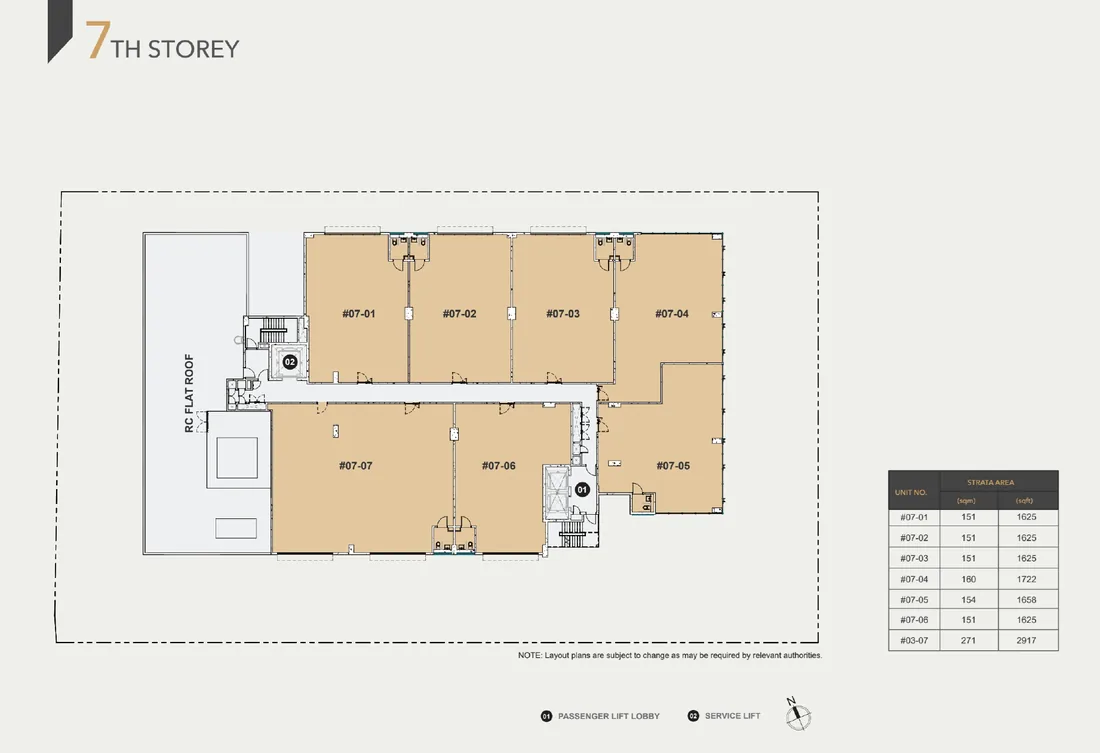
This is also where deal diligence needs to be sharper. Strata units can vary a lot in technical fit for industrial use. JTC materials point out that key technical checks for strata industrial units include floor loading, ceiling height, goods-lift access, loading-bay provision, and whether the trade matches the approved use.
That same approved-use focus links back to B1 requirements around industrial use quantum. Even if the unit is in a B1 setting and looks like a fit for a clean industrial tenant, you still need to confirm that your intended use and your tenant’s operational needs align with what the unit is approved for.
Here is a concise checklist of technical checks that matter in real negotiations:
- Floor loading compatibility
- Ceiling height suitability
- Goods-lift access for workflow
- Loading-bay provision for trucks and deliveries
- Whether the intended trade matches approved use
If you skip these checks and you end up with a mismatch, you may be forced into a quicker exit, which then brings SSD timing back into focus.
City-fringe industrial property: why location can improve your odds, but not your timing
City-fringe industrial precincts such as Tai Seng, Paya Lebar, Ubi, Kallang, and MacPherson are often favoured for e-commerce, light manufacturing, R&D, and urban logistics because they are closer to workforce catchments and transport links. URA’s B1 planning clusters also show B1 industrial clusters around city-fringe MRT areas.
This can matter for your industrial property rental yield Singapore expectations, because tenant demand for “workforce and transport aware” logistics and light industrial activities can be steadier. For example, if you are evaluating a Tai Seng industrial property or a Paya Lebar industrial property, the location advantage can improve tenant attraction and potentially reduce vacancy risk.
However, location does not change the SSD timetable. If you sell within 1 year, you do not get a discount because the market is active in the city-fringe. SSD is holding-period based. So strong location improves business outcomes, but it still doesn’t remove the need to plan your holding period realistically.
Ramp-up industrial units and logistics efficiency: operational fit affects your holding period
Many buyers talk about “specs” as if they are just technical trivia. In industrial properties, the difference between an efficient logistics layout and a frustrating one often decides whether your business stays in place long enough to avoid an unwanted exit.
Ramp-up factories provide direct vehicular access to units for loading and unloading. In contrast, flatted factories are typically accessed via common corridors, lifts, and loading bays. This layout choice affects logistics efficiency, truck access, and fit-out flexibility.
Why this matters for SSD is simple: operational friction increases the odds of moving earlier than planned. If your unit’s logistics flow is poor for your workflow, you may feel forced to upgrade, relocate, or restructure earlier. That can cut your ownership period short, leading you into SSD bands.
So while ramp-up industrial units Singapore may have an upfront premium in some cases, the trade-off can be worth it if it prevents a premature exit.
Buying under company name: acquisition structure does not eliminate disposal SSD
It is common to buy industrial property under company name, particularly when the asset is intended for business use or to hold as an investment.
But it is crucial not to confuse acquisition structure with disposal treatment. SSD for industrial property is applied on disposal based on holding period. The IRAS SSD schedule does not depend on whether the buyer is an individual or a company in the way ABSD rules do.
So if you are considering buying industrial property under company name as part of an industrial property investment Singapore strategy, treat SSD as a separate decision variable: plan the holding period consciously.
How lenders and financing mindset can influence your timing
Even when the industrial asset is cash-flow positive, financing structures can still influence how long you can reasonably hold.
Industrial property loan Singapore decisions usually reflect lender assessment. Market practice indicates financing for property investment generally depends on the lender’s evaluation, and non-residential loans are commonly under commercial terms rather than residential housing loan rules.
This matters because Space Nova floor plan cash flow pressure, margin requirements, and refinancing timing can push sales earlier than you planned. If your funding structure is sensitive in the first few years, you might be more likely to dispose within the SSD window, even if you still like the unit.
A careful investor model keeps SSD in the spreadsheet, not as an afterthought. The SSD rates are known, and the holding period bands are clear, so you can stress-test your plan under “sell at 18 months” or “sell at 24 months” scenarios.
Where the real “calculation” happens: pairing SSD with your revenue plan
When people evaluate an industrial asset, they often focus on industrial property rental yield Singapore and the strength of tenant demand. That is necessary, but not sufficient. SSD turns the ownership duration into a financial variable.
Since SSD is 15% within 1 year, you should be cautious if your plan depends on a quick flip, a short-term relocation, or a property turnaround you cannot fully control. If you are buying as a tenant replacement vehicle, for example, and you do not control the tenant’s lease certainty, your holding period might drift.
Within 1 to 2 years, 10% SSD still makes many “short timeline” strategies look fragile unless the price movement and net operating cash flow are strong. The 5% band within 2 to 3 years is less punishing, but it still exists, and it still meaningfully affects returns.
Only after 3 years does the SSD risk fully disappear for industrial property disposals under the IRAS schedule. So even if your business could realistically sell earlier, SSD encourages you to treat 3 years as a practical milestone for planning purposes.
Putting it together: practical decision-making for industrial sellers and investors
The easiest way to get into trouble is to treat SSD as something that only affects someone else. In reality, SSD becomes a problem when your operational reality forces a sale, or when you find a better opportunity and decide to exit earlier than expected.
If you are buying industrial property Singapore today, you can reduce SSD surprises by aligning three things:
Your intended use and approved-use constraints (especially in B1, with the 60% industrial use requirement)
Your logistics and operational fit (like whether ramp-up access matters to your workflow) Your realistic holding period (whether you can credibly stay beyond 3 years)For resales, your buyer base is also influenced by zoning and specs. A B1 setting is intended for clean and light industry, with use controls and buffers relevant to the development. That can be a strength if your intended trade matches the clean industry profile. It can also become a constraint if your future business needs drift.
B1 vs B2 industrial zoning also matters in this chain. If a unit is positioned for heavier use potential, buyers with that kind of operation may value different technical specs. If your unit is a B1 asset but your business model needs the heavier-industrial profile, you might end up stuck or forced to move earlier.
Common edge cases I have seen in industrial exits
I will keep this grounded in the rules we have, because the stamp duty part is the same across edge cases: holding period drives SSD for industrial property. The “edge” is how often real owners misjudge holding duration.
One common pattern is operational disruption within the first year, where a business relocates quickly, or a tenant situation changes faster than expected. Another pattern is overconfidence in liquidity, where an owner assumes buyers will always come for industrial assets, but Space Nova freehold industrial liquidity depends on approved use fit and unit specs.
Even if the market looks liquid, a buyer cannot buy something they cannot plausibly use, especially under B1 constraints. When that mismatch exists, sales take longer, not shorter. But if you are forced to sell due to funding constraints, you might still sell within the SSD window even if the ideal buyer would be later.
What to do next if you are planning to buy or sell
If your timeline is uncertain, treat SSD like a guardrail. Build your plan around the known bands, and then stress-test your cash flow and operations for scenarios where the holding period compresses.
If you are buying, do not stop at “Is it B1?” Spend time on approved use alignment, because B1 is explicitly oriented toward industrial purposes and URA’s use quantum requirement places a real boundary on what the property is expected to host. If you are considering city-fringe options like Tai Seng industrial property or Paya Lebar industrial property, factor location benefits into rental confidence, not into SSD avoidance.
If you are selling, the holding period is the variable you can control at least to the extent you can influence the timing of your disposal. If your disposal cannot be delayed beyond 3 years, you should assume SSD will apply at 15%, 10%, or 5% based on where the holding period lands.
Industrial property stamp duty Singapore can be managed, but it cannot be wished away. The best outcomes usually come from disciplined timing and a realistic understanding of how zoning, specs, and logistics lock in your operational runway.